
CHAPEL OF SANTO DOMINGO DE GUZMÁN OR DE LA SOLEDAD.
CHAPEL OF SANTO DOMINGO DE GUZMÁN OR DE LA SOLEDAD.
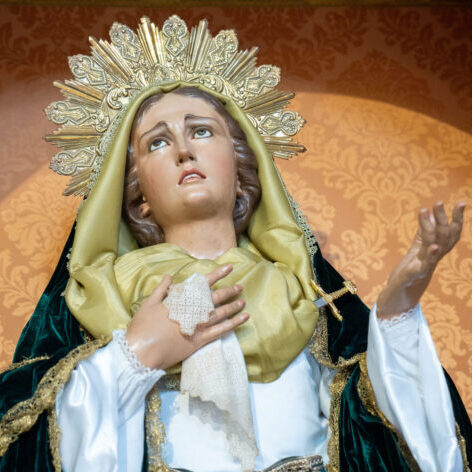
The chapel dates from the middle of the 16th century, built immediately after the French invasion. In accordance with this religious foundation and the eschatological message promoted by the Dominicans in a Counter-Reformation style, the images that presided over the chapel were those of the Holy Crucified Christ and Our Lady of Solitude, which depicted the redemption of the human race through the sacrifice of the cross. Today, the chapel is presided over by an ornamental altarpiece that may have been in the nave of the church or in a chapel in the convent cloister, and which was placed after the convent was closed in 1836. It could be the work of the master Bernabé Fernández, around 1730. In it, Santo Domingo de Guzmán is worshipped, the work of Antonio de Orbarán on the occasion of the profession of faith of his son Fray Antonio de Orbaranes. Its iconographic attributes are worthy of mention: The Church that it carries in its hand, a work of silver openwork and filigree brought from Havana, possibly in the decade of the 70s of the 17th century; and the three openwork silver mitres with rococo decoration from the last quarter of the 18th century. Also worshipped in this chapel is Our Lady of Hope, a work by the sculptor Andrés Falcón from the middle of the 20th century. It is carried in procession on Holy Tuesday accompanying the Lord tied to the Column. The chapel is enclosed by a 16th century Mudejar ceiling, decorated with lacework, which is displayed on all the skirts, decorated with a dazzling polychromy based on plant rosettes, floral motifs and themes inspired by Renaissance grotesque, arranged symmetrically in the frieze.